










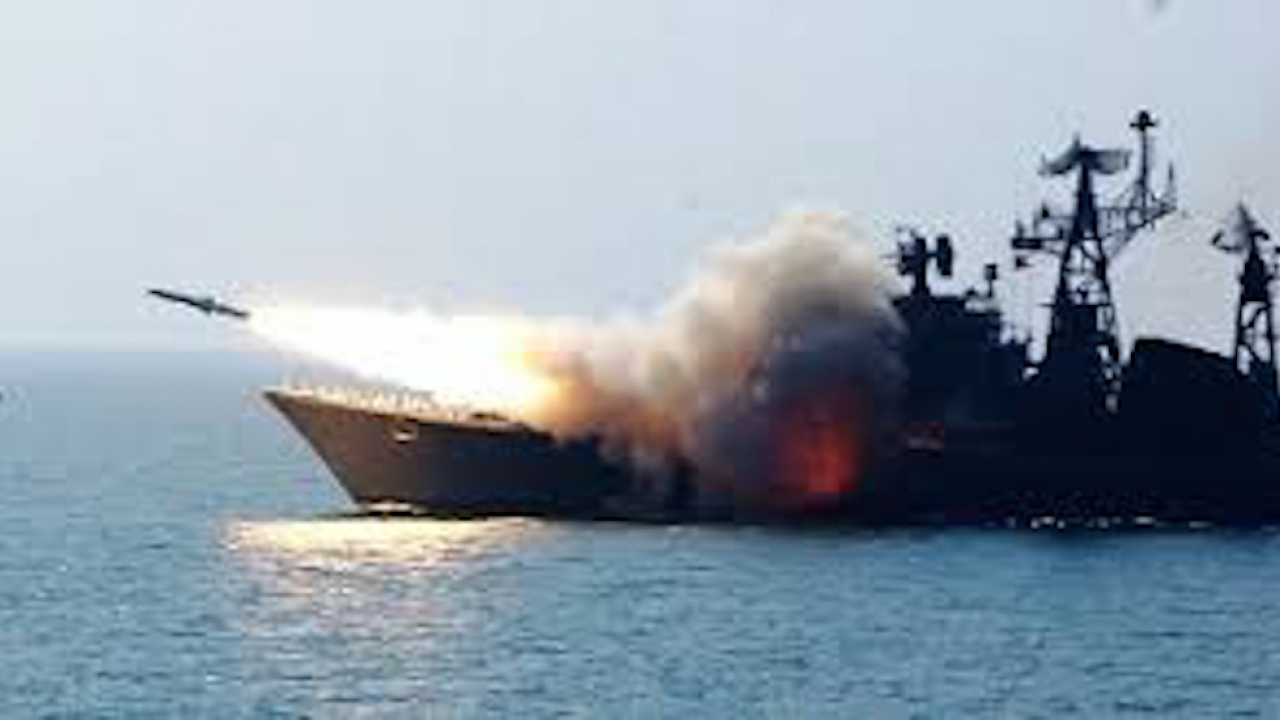
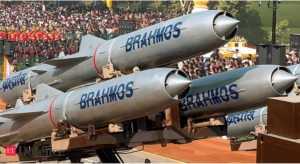
With deliveries of BrahMos missiles from India to the Philippines set to begin early in 2024, Manila is now planning to procure Tejas jets as both countries plan to take on China.
The bilateral relationship between India and the Philippines is growing at a blistering pace, especially in defence and security, even as both countries are increasingly standing up against Chinese aggression, much to Beijing’s discontent. Earlier this week, Indian warship INS Kadmatt docked at Manila for an ongoing long-range operation deployment that is aimed at boosting bilateral maritime cooperation.
INS Kadmatt is an indigenously designed and built Anti-Submarine Warfare Corvette, equipped with a state-of-the-art anti-submarine weapon suite. The visit was followed by the joint warfare exercise, Maritime Partnership Exercise (MPX), between INS Kadmatt and BRP Ramon Alcaraz of the Philippine Navy on December 13 in the South China Sea (SCS), in a major signal to China.
While India’s relationship with ASEAN (Association of Southeast Asian Nations) as a grouping, of which the Philippines is one of the 10 member countries, has remained tepid as far as strategic and defence ties are concerned, the bilateral security relationship between New Delhi and Manila has been gaining strength to strength with China as the “common adversary” for both, sources told ABP LIVE.
ASEAN is a 10-member economic grouping consisting of the Philippines, Singapore, Thailand, Malaysia, Vietnam, Indonesia, Laos, Myanmar, Cambodia and Brunei.
According to sources, both India and the Philippines not only see China as the common challenge in the South China Sea as well as the Indo-Pacific, but both countries also share common partners such as the United States and Japan.
The Ministry of Defence said that the visit undertaken by the Indian warship was aimed at “bolstering maritime cooperation between India and Philippines”. The port call by INS Kambatt and the MPX took place in the backdrop of escalating tensions between Manila and Beijing that has kept the entire region in tenterhooks. Almost on a daily basis the Philippines Navy is facing a combat-like situation with the Chinese Navy.
Shambhu Kumaran, India’s Ambassador to the Philippines, in a recent interview to the local media said, “We have a shared interest in peace and stability of the region. So, you will expect that India will continue a strong navy and maritime security engagement … We fully support our Philippines friends in their efforts to ensure that whatever happens in the seas respects the constitution of the seas.”
Just days before the MPX was to take place, China and the Philippines had a major maritime standoff. According to Manila, a boat commissioned by the National Task for the West Philippine Sea, which was bringing supplies to a grounded vessel suffered serious engine damage after the Chinese Coast Guard present at the area shot water cannons at it. The incident happened on December 10.
The Philippines government has “vehemently condemned” the actions being carried out by the Chinese Coast Guard and the Chinese Maritime Militia, calling the move “illegal and aggressive” as it involved civilians. Warning Beijing, Manila on Monday said, “This is a serious escalation on the part of the agents of the People’s Republic of China.”
Philippines Secretary of National Defense Gilberto Teodoro Jr on Friday said China is trying to “convert the South China Sea into a lake of China.” Post the December 10 incident, he also spoke to the US Secretary of Defence Lloyd Austin in which Washington expressed its support for the Philippines.
The Philippines is a treaty ally of the US.
Lecturer at the Department of International Studies, De La Salle University in Manila, Don McLain Gill told ABP Live, “At a time when international cooperation is being characterised by like-mindedness, shared interests, and common threat perceptions, it is likely that the India-Philippines bilateral partnership will continue to strengthen.”
Gill also said, “A common concern of both countries is definitely China’s growing belligerence and expansionism in the Indo-Pacific. As Manila has now revitalised its desire to proactively defend its sovereignty and sovereign rights more effectively, it is inevitable for the Philippines to want to work more closely with materially powerful partners like India, who also share the same concerns.”
“It is also important to note how India is also a close strategic partnership of Manila’s key partners such as the US, Japan, and Australia, resulting in the convergence of diplomatic interests,” he added.
(Courtesy by; Abp news)

















+ There are no comments
Add yours