







Equity Subramonium Prasad held that the connection between the Specialist General of India and the Public authority of India is that of a guardian and a recipient.
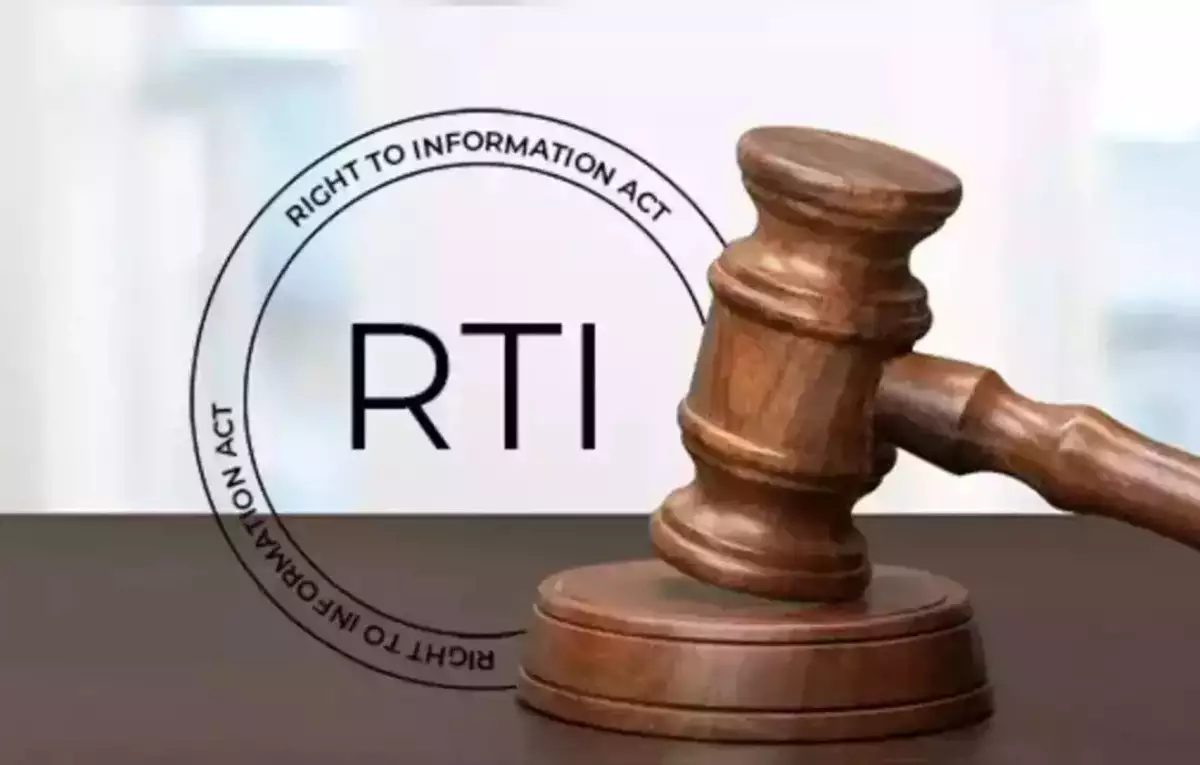
The Delhi High Court as of late held that the legitimate counsel given by the Specialist General of India to the Public authority of India and other government divisions is excluded from divulgence according to Segment 8(1)(e) of the Right to Data Demonstration of 2005 (RTI Act) [Union of India and Anr v Subhash Chandra Agrawal].
Equity Subramonium Prasad saw that according to the guidelines of commitment of a regulation official for Association of India – – Regulation Official (States of Administration) Rules, 1987 – and the decisions of the High Court, the connection between the Specialist General of India and the Public authority of India is that of a trustee and a recipient.
The Specialist General is compelled by a sense of honor to work to help the Association and different divisions with sincere intentions, where there exists trust and dependence by the recipient upon the Specialist General, the Court pushed.
“This Court finds no illness with the contention set forth by the Ld. Counsel for the Applicant [Union of India] that the exhortation offered by the Ld. Specialist General to the Association of India and other different government divisions is finished in the idea of a trustee, and consequently the exemption of Segment 8(1)(e) of the RTI Act has been conjured,” Equity Prasad closed.
The Court arrived at this resolution as it put away a request passed by the Focal Data Official (CIC) on December 5, 2011 for the situation recorded by one Subhash Chandra Agrawal.
The Focal government had recorded the request testing the CIC request which coordinated the Focal Public Data Official (CPIO) of the Service of Regulation and Equity to give the duplicate of the note/assessment of 2007 given by the then Specialist General of India to the Division of Broadcast communications of past Service of Interchanges and Data Innovation.
The data connected with the different cases documented by the Cell Administrators Relationship of India before the Telecom Questions Settlement and Re-appraising Council (TDSAT) and the Delhi High Court in regards to the apportioning of 2G range.
In the wake of considering the case, Equity Prasad held that despite the fact that Part 8(2) of RTI Act gives that assuming excluded data reinforces the confidential decision-production of people and responsibility, the equivalent can be given, this help can’t be squeezed for this situation.
The Court held that Agrawal neglected to exhibit regarding what is the public interest that would be supported by acquiring the subtleties of the guidance of the Specialist General.
“The candidate has not had the option to show with regards to what is the public interest that would be supported in order to conjure the arrangements of Area 8(2) of the RTI Act. Without any open interest, the data looked for by the Respondent, which is absolved under Segment 8(1) of the RTI Act, this Court isn’t leaned to conjure the arrangements of Area 8(2) of the RTI Act.”
The Court then continued to save the CIC request and discarded the supplication.





+ There are no comments
Add yours