









The Court said that such orders are by their very nature passed during the time spent examination and such test could be blocked assuming such data is uncovered.
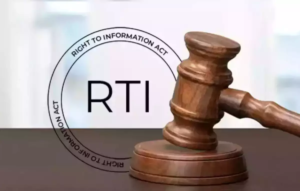
The Delhi High Court as of late held that data comparable to the capture, tapping or following of a telephone is excluded from exposure under Segment 8(a) of the Right to Data Act, 2005 (RTI Act) [Telecom Administrative Power of India v Kabir Shankar Bose and Ors].
Area 8(a) of the RTI Act absolves any data from the ambit of the RTI Act, the revelation of which would preferentially influence the security, uprightness and vital interests of the country.
A Division Seat of Judges Vibhu Bakhru and Amit Mahajan said that any request by the concerned government comparable to capture or tapping or following of a telephone is passed when the approved official is fulfilled that it is important to do “in light of a legitimate concern for sway and uprightness of India, the security of the State, well disposed relations with the unfamiliar states or public request or for forestalling impelling to the commission of an offense”.
Such request, in this manner, by its very nature might have been passed during the time spent examination, the Court noted.
“In a given case, the exposure of any such data, thusly, may obstruct the course of examination, and might be understood to preferentially influence the sway and honesty of India, the security, the key, logical, and financial interest of the State, relations with the unfamiliar states or lead to prompting of an offense, and would consequently be excluded from divulgence under terms of Segment 8 of the RTI Act,” it noticed.
The Court was managing a request recorded by the Telecom Administrative Power of India (TRAI) against the single-judge request declining to impede the Focal Data Commission (CIC) headings to TRAI.
CIC had coordinated TRAI to gather data from the concerned telecom specialist co-op and illuminate the RTI candidate, one Kabir Shankar Bose whether his telephone was under observation, following or tapping and under whose bearings it was finished.
In the wake of considering the case, the Court noticed that Segment 11(3) of the TRAI Act explicitly gives that while releasing its capabilities under sub-areas (1) and (2), the TRAI will not act against the interest of the sway and honesty of India, the security of the State, agreeable relations with the unfamiliar states, public request, tolerability or profound quality.
The Court was of the view that while the TRAI Act makes reference to one of its capabilities to guarantee consistence with the agreements of the permit by telecom supplier, the equivalent can’t be perused so extensively to incorporate every single move initiated by the telecom specialist organizations.
The equivalent must be given a significance in similarity with the item looked to be accomplished by the TRAI Act, the Court focused.
“To hold that requesting data comparable to capture or following or tapping of a telephone would be inside the force of TRAI under Segment 12 of the TRAI Act, wouldn’t be in congruity with the capabilities determined in Area 11 of the TRAI Act.”
The Court underlined that any opposite view would enable the TRAI to call for data and slow down the elements of telecom specialist co-ops and wouldn’t be in consonance with the items tried to be accomplished by the TRAI Act.
“As alluded to over, the authority was laid out to control telecom administrations to safeguard the interest of specialist organizations and shoppers in the telecom area, and to advance and guarantee deliberate development of the area.”








+ There are no comments
Add yours